There was a time when I believed emergency funds were only for “financially disciplined” people. The kind of people who track every single dollar or pound, never overspend, and somehow magically save 6–12 months of expenses while also investing in index funds, stocks, and retirement plans.
Reality looked very different from where I came from.
I belong to a working-class family where money was never just money — it was stress, sacrifice, delayed dreams, and survival. I watched my father struggle to arrange college tuition fees every few months. I saw friends going for private tutoring while I quietly accepted that I could not afford the same opportunities. My parents sacrificed food, clothes, comfort, and even the idea of owning a proper home just to keep the family moving forward.
And even after growing up seeing financial struggle closely, I still made mistakes.
I spent money impulsively on gadgets, lost money in the stock market without proper analysis, and sometimes acted emotionally instead of financially. I bought things first and regretted them later. One example was purchasing an iPhone just before a major sale period and losing hundreds in value simply because I did not pause and think.
Today, I understand something important:
- An emergency fund is not about becoming rich.
- It is about becoming protected.
Why This Topic Feels More Important Than Ever
Over the last few years, the world has become more uncertain for ordinary people. We have seen:
- Layoffs
- Inflation
- Rising interest rates and monthly payments
- Unstable job markets
- Increasing medical and living expenses
- AI and automation fears
- Global conflicts affecting economies
- Constant pressure on everyday households
Personally, one of my biggest financial fears is this: I am heavily dependent on my current job for survival. Food, bills, responsibilities, family support — everything depends on one paycheck deposit message every month. And the truth is, many people are living exactly like this.
The problem is not that people do not understand saving. The problem is that real life keeps interrupting the process. Just when someone starts budgeting:
- An unexpected medical expense appears
- House repairs happen
- Family events come up
- Travel becomes necessary
- Inflation increases daily costs
- Burnout mentally exhausts them
This painful middle phase is something most finance content rarely shows.
What Most Finance Influencers Get Wrong About Emergency Funds
Many videos online make personal finance look too simple.
“Just save 6 months of expenses.” “Cut unnecessary spending.” “Invest consistently.” “Wake up at 5 AM.” “Discipline is everything.”
And within 20 minutes, it sounds like your financial life is solved. But real life is not edited like a podcast clip. The journey between starting savings and actually becoming financially secure can be emotionally exhausting.
Especially if you:
- Support your parents or family
- Come from a working-class background
- Carry loans or credit card debt
- Deal with healthcare or unexpected costs
- Face job uncertainty
- Are the first generation trying to improve your family’s future
Financial discipline matters. But pretending that discipline alone solves everything ignores how difficult life can become in between.
So… How Much Emergency Fund Do You Actually Need?
My honest belief today is simple: You need enough money to survive peacefully for at least 6 months if your income suddenly stops.
Not luxury. Not vacations. Not lifestyle upgrades. Just survival without panic.
Your emergency fund should cover:
- Rent, mortgage, or housing
- Groceries
- Medicines and healthcare
- Debt payments and loans
- Utilities
- Essential travel
- Family responsibilities
- Basic living expenses
But here is something important: If 6 months feels impossible right now, do not get discouraged.
Many people hear “save 6–12 months” and immediately feel guilt because they are struggling to save even one month. I understand that feeling deeply. For someone starting from zero, the first goal should not be perfection. The first goal should be protection.
Start with:
- $100 / £100
- Then $500 / £500
- Then one month of expenses
- And slowly build upward
Small progress still creates security.
The Biggest Mistake I Learned From
One of my biggest financial mistakes was acting emotionally instead of logically. Whether it was gadgets, impulsive spending, or entering stock market trades without proper analysis, I often made decisions first and regretted them later.
The lesson I learned was powerful: Pause first. Analyze the situation. Do the basic math.
Sometimes financial stability is less about earning more and more about avoiding unnecessary damage. An emergency fund protects you from both:
- External emergencies
- Your own impulsive decisions
Emergency Funds Are Not Just Financial — They Are Emotional
For me, an emergency fund feels like maximum security. Not because it makes me wealthy, but because it creates:
- Protection during hard times
- Freedom from constant fear
- Better support for my loved ones
- Relief from future burdens
That emotional security matters more than people realize. When your family depends on you, financial stability stops being a spreadsheet calculation. It becomes peace of mind.
What People Should NOT Do With Their Emergency Fund
You do not need to overcomplicate this. But I personally believe:
- Your emergency fund should stay accessible (like a high-yield savings account)
- Yet not remain completely idle losing value to high inflation
- And it should never be treated like casual spending money
Most importantly: Before spending your emergency fund, remember the pain it took to build it. That thought alone can prevent many unnecessary decisions.
Final Thoughts
If you are struggling to build an emergency fund, you are not alone. Many responsible, hardworking people are trying to save while simultaneously handling:
- Family pressure
- Inflation
- Emotional stress
- Unstable jobs
- Rising responsibilities
This is not failure. This is reality.
You do not need to become a finance influencer overnight. You do not need perfect budgeting spreadsheets. And you definitely do not need to pretend your life is financially sorted for social media.
Just start. Even small savings can become future protection.
Because in the end, an emergency fund is not just about money sitting in a bank account. It is about giving yourself and your family a little more safety, freedom, dignity, and peace in an unpredictable world. And sometimes, that matters more than chasing quick wealth.
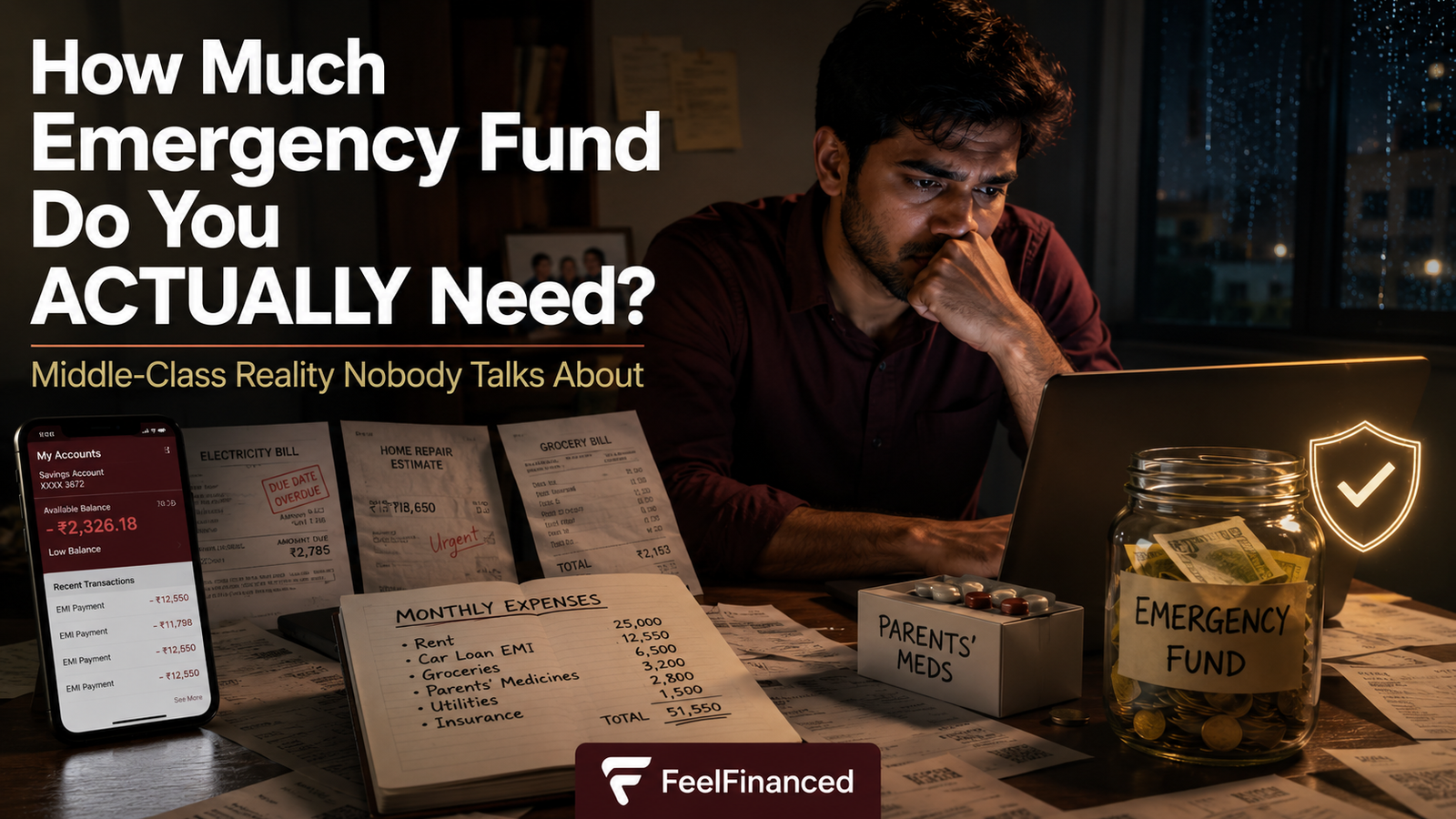
How Much Emergency Fund Do You Actually Need?
